News
How Human and Artificial Intelligence Can Drive the Transformation of the Logistics Sector
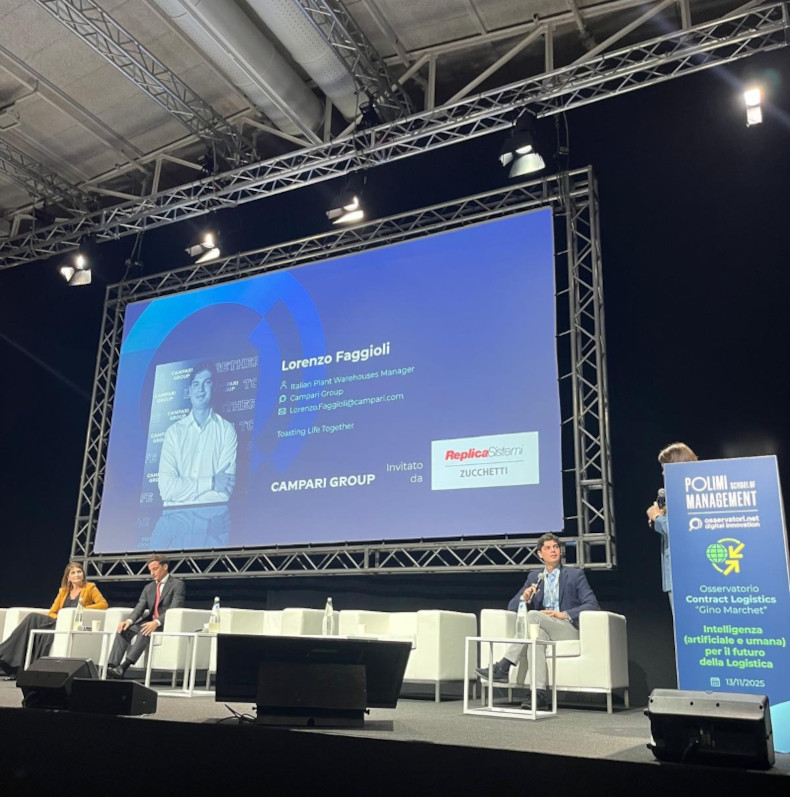
During the 2025 edition of the “Gino Marchet” Contract Logistics Observatory conference at the Politecnico di Milano, held on 13 November 2025, experts, companies and institutions gathered to analyse emerging trends, strategies and concrete opportunities for the Italian logistics sector.
The event also presented the Observatory’s annual research results, with a central focus on Artificial Intelligence (AI) and its role in managing logistics processes.
A Sector on the Rise
The research introduction highlights that, after several challenging years, third-party logistics in Italy is showing signs of recovery. The sector is experiencing revenue growth and an increasing number of active operators, although production costs remain high. Some cost drivers—such as fuel and the cost of capital—are beginning to ease.
Client–provider relationships are also evolving: according to Damiano Frosi, Director of the Contract Logistics Observatory, the use of indexed contractual clauses is rising. These are essential tools for adapting to market fluctuations and ensuring stable, long-term partnerships.
On the sustainability front, many companies constantly monitor their environmental impact, although more complex and costly investments are often postponed.
AI: A Concrete Reality
Artificial Intelligence is emerging as a key enabler of modern logistics.
Survey data from 7,187 client firms shows that:
- 30% already have AI projects active in logistics, and this share is expected to reach 44% within three years;
- Adoption rates vary by size: 46% among large companies (over €250M revenue), 42% among medium-sized firms (€50–249M), and 19% among small businesses (€10–49M);
- AI is applied more in office-based activities (26%) than in operational tasks (16%);
- The most common use cases include order management (14%), demand forecasting and material replenishment (14%), and supplier monitoring (10%);
- In operational contexts, AI is mainly used in warehouse operations (12%) and transport (7%);
- 81% of companies adopting AI report significant benefits, with average satisfaction at 7.7/10—improvements include service quality, process performance, productivity, cost reduction and sustainability;
- Only 11% use AI to replace human labour, while 24% employ it to augment human capabilities.